Be Well Healing Arts
9086 Cypress Green Drive, Suite C
Jacksonville, FL 32256
(904) 990-3228
(904) 295-0127 Fax
  • Home
  • Acupuncture Care
    • Acupuncture General Info
    • How Does Acupuncture Work?
    • Acupuncture & Herbal Medicine
    • What Can Acupuncture Treat?
    • Pain
    • Anxiety & Mental Health
    • Fertility Acupuncture & Nutrition
    • Women's Health Concerns
    • Pre-Natal
  • Functional Medicine
    • Functional Medicine & Clinical Nutrition
    • Adrenal Fatigue Testing in Jacksonville, FL
  • About
    • FAQs
  • Services & Fees
  • Testimonials
    • Video Testimonials
  • Blog
  • Contact/Location
  • Schedule Appointment

Natural and Integrative Pain Management

6/7/2013

0 Comments

 
PictureNatural Pain Management through acupuncture, nutrition, & more
Whether you've got an acute injury such as a sprained ankle or long-term chronic pain such as fibromyalgia, headaches or arthritis, I approach pain relief from multiple levels and disciplines. All of these approaches have no potential for addiction or dependance, and have no harmful side effects. Additionally, some of these approaches (especially acupuncture) can be used along with prescription or non-prescription pain-killers to reduce the required dosage.

First, it is important to get you out of pain. It is also important to address the root cause of the pain, especially if it is chronic. If the pain is acute it is of course important to get you out of pain quickly, but also make sure that inflammation is addressed as well as structural re-alinement so that the pain doesn't become chronic.

Here are some of the ways I address pain:

  • Acupuncture-acupuncture is great for many ailments, but it is probably best known for treating pain. Needles are very thin and usually have minimal feeling for the patient. Patients usually need an average of 8 treatments to help relieve pain, but will usually feel results after just 1 or 2 treatments. Needles may be placed at the site of pain, but are also more often placed in areas where there isn't any pain. According to traditional Chinese energetic meridian theory, using needles even away from the pain can often be the most effective. Needles placed in the ear are also extremely effective for pain. The acupuncture needles may sometimes be stimulated by a gentle electrical current, which is a great strategy for pain relief. The electrical stimulation is usually pleasant to people receiving the therapy.
  • Cupping-cupping is a type of bodywork where plastic or glass cups are applied to the painful area and the air is removed from the cup, creating a suction. It is great for moving blood and lymph through the painful area, thus decreasing pain and stagnation. Many people have heard of cupping because of the characteristic marks that are sometimes left from the therapy. On a side note, cupping can be used for other things besides pain, such as detox or the common cold.
  • Patches & Ointments-There are several types of Chinese herbal patches and ointments that can help with pain relief, especially in acute injury. There are also nutritional substances that when applied to the body can relax tight and sore muscles, such as topical magnesium.
  • Diet and Nutritional Supplements-I may recommend an anti-inflammatory diet or nutritional supplements that decrease inflammation to support your pain relief program. Food allergies may need to be identified through special testing because unidentified food allergies can contribute to systemic inflammation and chronic painful conditions.
  • Herbal Medicine-Herbal medicine, especially Chinese herbal medicine, has many great strategies for addressing both chronic and acute pain. Does your pain flare up when it rains? Does your pain flare up when you sleep? Is your pain in the upper or lower part of your body, or in the low back? All of these things mean something in Chinese medicine and we can address them with herbal formulas.
  • Exercises-I may prescribe certain exercises like stretches, foam rolling or relaxation exercises.
  • Meditation-numerous studies show that meditation and mindfulness can help a great deal with chronic pain. For those patients that are interested, I may recommend a meditation program to assist with pain relief.
  • Referrals to Other Practitioners-I am a firm believer in multidisciplinary care. I love to refer out to massage therapists, chiropractors, physical therapists, psychologists and other professionals who I believe could assist you in getting out of pain. Often using a multidisciplinary approach is what works the best!


What has been your experience with natural pain relief? What has worked best for you? What methods would you like to try?



0 Comments

What is Stagnation and Why Will it Make You Sick?

5/25/2013

0 Comments

 
Picture
Stagnation of qi (energy) is one of the most basic causes for disease in Chinese medicine--and a lot of us have it, especially if there is chronic stress in our lives.

Stagnation can manifest as pain in the body, digestive upset, tightness in the shoulders, chest or other parts of the body, a lump in the throat or stomach, depression of the spirit, sighing, mood swings and anger, hormonal imbalances (especially PMS) and more.

In Chinese medicine there must be smooth flow of energy in order to be healthy and happy.

Acupuncture and Chinese herbs can greatly improve qi stagnation. However, it is equally important for you to help yourself. If you start noticing behaviors, thoughts, patterns and activities that lead to stagnation and actively interrupt them, it will help alleviate the stagnation.

Ways to help yourself relieve stagnation:
  • Notice when your shoulders are tense or you are holding/tightening any part of your body and actively let it relax. Common places for holding tension are the shoulders, neck and jaw. Some people will even notice their arms or legs may tighten. Start paying attention to where and when you tighten. Tightening in the body in response to certain people or situations can be a good clue that we need to remove ourselves from the interaction.
  • Notice when you are thinking thoughts or having emotions that lead to anger, resentment or frustration. When you are having these emotions, just notice them and try not to get too bogged down in them. Try to figure out how to release them. Often forgiveness and acceptance of yourself and others is a good place to start. There is a Chinese medicine saying that "the qi follows the mind and the mind follows the qi." This means that our thoughts and emotions impact the smooth flow of qi throughout the body, and can lead to disease in the body as well as the mind. Please don't repress your emotions, as this can lead to even more stagnation. Instead, notice the emotion and experiment with accepting and releasing the emotion.
  • If you are very inactive or sit for long periods of time, get moving. Exercise relieves qi stagnation. Just getting up to stretch and mobilize your joints can help quite a bit.
  • Start noticing what is going on with your breath. The breath moves qi and is also qi itself. If you hold your breath, qi cannot flow. In stressful situations, we often hold our breath and some of us get into this pattern even when not under stress. Start paying attention to the breath and breathing deep into the belly when possible.
  • Try to look at your lifestyle and see if you need to modify it. If your schedule is driving you crazy and leading to stagnation, it will be hard to fully regain your health and relieve your stress. Our modern world is demanding, and sometimes we have to learn to say no to one more commitment, project or dinner party. Having some unstructured time each day (or at least a few days a week) is helpful to allow the qi to flow.

Do you have any tips you would like to add?

0 Comments

Avoiding Birth Control & Treating Menstrual Disorders with Acupuncture

3/15/2013

0 Comments

 
Picture
Did your doctor put you on birth control to get ride of acne, cramps or to stop heavy bleeding? Are you concerned about some of the side effects of birth control which can include weight gain, vitamin B6 deficiencies (which can cause all sorts of problems like depression and even carpal tunnel syndrome), headaches, breakthrough bleeding, mood swings and decreased libido?

Chinese medicine (acupuncture and herbs) can help TREMENDOUSLY with menstrual disorders. Acupuncture and especially herbs are helpful for menstural cramps, irregular cycles, PMS and mood swings, anxiety, depression and insomnia associated with your period, breast tenderness, heavy bleeding and amenorrhea (your period stopping).

Chinese medicine, acupuncture, nutrition and herbs can also help a great deal with acne.

You can usually expect your periods to improve within 3 cycles with the use of Chinese medicine and nutrition. Acupuncture can balance your hormones naturally so that you don't have to use the birth control pill and experience the risks associated with it.

If you are looking for natural family planning options I recommend the book Taking Charge of Your Fertility.  These methods of natural birth control are also called the rhythm method or the fertility awareness method. To use natural family planning to avoid pregnancy (or to induce a pregnancy, for that matter) you need to have regular cycles, track your cycle and be aware of your body. As stated before, Chinese medicine and acupuncture can work wonders to regulate your cycles and if your acupuncturist has a focus on women's health they should be able to help you become more aware of your body and its natural rhythms.

0 Comments

Training for Acupuncturists

3/13/2013

0 Comments

 
Picture
Do you ever wonder how long it took your acupuncturist to go through school?  Do you wonder what he or she studied?

When I was looking into going to school for acupuncture and Chinese medicine, I was astonished to learn the depth of training and scope of practice for acupuncturists in the United States. I’d been going to acupuncturists for years to care for my own health, but I’d never considered how much training and skill was involved in safely inserting needles into the body or prescribing a proper herbal formula.

Acupuncture and Chinese medicine training programs in the United States are generally 4-year, full-time master’s degree programs (yes, we even go to school in the summer!). Some people will complete their training on an even faster 3-year accelerated track, but it still takes the same number of credits and hours.

Acupuncturists are well trained, so you should feel confident when going to a licensed acupuncturist who attended an NAACOM accredited school. Acupuncturist training includes medical terminology, anatomy and physiology, western pathology, pharmacology, herb-drug interactions, nutrition, orthopedic testing, western medical diagnostic testing such as bloodwork, massage and bodywork, energy exercises like tai chi and of course numerous classes in acupuncture techniques and herbal medicine. In addition to this, acupuncturists complete a clinical internship treating patients under the supervision of an experienced and licensed acupuncturist.  At AOMA in Austin, Texas where I attend school, our internship is about 1,000 hours.

It is very important for acupuncturists to be well versed in modern western medicine and anatomy. More and more, acupuncturists are treating complex conditions in the United States, where treatment with a primary care provider might need to be coordinated. In addition, caution with the many pharmaceutical drugs and their potential for interactions with nutrients and herbs are also important to be aware of for the acupuncturist.

Even though entry-level training for acupuncturists is currently a master’s degree, it is likely in the future that this will change to a first-professional doctoral degree. We’ve seen this happen with other fields lately, such as physical therapy. The funny thing is, that the master’s programs in acupuncture are already so robust that few classes will need to be added to bump it up to a doctoral level.

Once an acupuncturist graduates from school and is licensed, the scope of practice in most states includes the following:

•               acupuncture
•               herbal medicine
•               massage and bodywork
•               nutrition
•               energy exercises such as tai chi and qigong

In some states such as California, Arkansas, New Mexico and Florida acupuncturists are considered primary care providers. This means they can order blood work and perform many other duties that your family doctor might.

What do you think? Were you surprised to learn the depth of training that acupuncturists receive? Do you think anything should be added or taken away from acupuncturist training?


0 Comments

Getting Your Zzzz's

3/12/2013

0 Comments

 
Picture
We've heard it again and again and again. Sleep is so important for our health. You need to get 7-9 hours a night. We need sleep to repair the body, reduce inflammation, balance our hormones, lose weight and support brain health. These are all true things. Sleep is critical, and if you aren't sleeping well, no amount of acupuncture, herbs or a healthy diet will make you feel happy and healthy (although these things can also HELP you sleep well).

Here's a quick list of things that can help you get your Zzzzz's.

1.) Balance your blood sugar. This means lowering your intake of carbohydrates and including some good protein and fat at each meal. If your blood sugar is not stable, your sugar can drop low in the middle of the night and you will wake up, even though you may or may not experience hunger. Your body experiences a sugar crash as a huge emergency because your brain isn't getting the sugar it needs to function. So again, make sure to eat three good meals in the day and include good fats and proteins. There are some nutrients that can help blood sugar stabilization which include b vitamins, magnesium, chromium and herbs such as gymnema sylvestre. Ask your practitioner for a supplement recommendation if diet alone isn't working for you.

2.) Wind down properly at night. It is a recent phenomenon in human evolution that we have bright lights well into the night. All of those lights decrease the amount of the hormone melatonin that is produced by the pineal gland. Melatonin is what helps us fall and stay asleep. Make sure to dim the lights in your house about 2 hours before bedtime. Also stay off any backlit electronic devices like iphones, reading tablets and computers before bed. It's also a good idea to keep your room really dark. Cover any sources of light in the room such as alarm clocks, and use blackout curtains over the windows to block out streetlights.

3.) Have a Ritual. Having a nighttime ritual that promotes relaxation is a good idea. Some people like to journal about things they are grateful for. Some people like to pray, meditate or read inspiring or spiritual literature. Maybe some gentle yoga is for you. Perhaps a bath with epsom salts and lavendar. Experiment with a nighttime ritual that promotes peace, ease and relaxation.

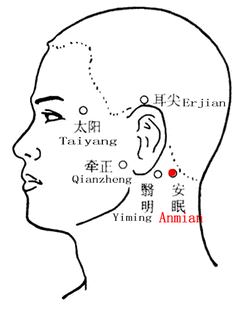
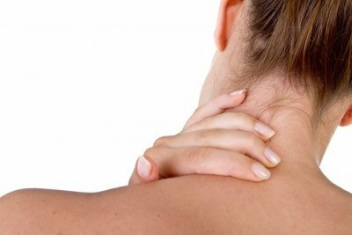
4.) Press Acupuncture Point An Mian. There is an acupuncture point on the sides of the neck (see image below) that is specifically for peaceful sleep and it has been shown in acupuncture studies to help people sleep. Have someone rub this for you, or use a foam roller or tennis ball to rub it by laying down on your back and putting the roller or ball under your neck. It's like a neck massage! Acupuncturists use this point in combination with others to help promote restful sleep.

5.) Keep Your Cool. Melatonin production is also helped from having a cool body temperature. Try not to let the temperature get above 70 in your room and sleep in light bedclothes (or naked if you like!). Taking a hot bath or shower before bed can help cool your internal temperature, as your body will compensate for the hot water by cooling you down.

6.) Use herbs and nutrients to lower stress and anxiety. If your mind races at night and you worry about things, get some help from a professional herbalist or nutritionist to help lower your cortisol and promote overall relaxation.

Picture
Acupuncture for Sleep and Insomnia
0 Comments
Forward>>

    Author

    Kendra Lay, ACN

    Archives

    June 2024
    May 2024
    April 2024
    March 2024
    February 2024
    December 2023
    July 2023
    June 2023
    March 2023
    December 2021
    September 2020
    August 2020
    July 2020
    May 2020
    April 2020
    October 2019
    February 2019
    January 2019
    May 2018
    July 2017
    February 2017
    July 2016
    April 2016
    March 2016
    February 2016
    January 2016
    December 2015
    November 2015
    September 2015
    August 2015
    July 2015
    May 2015
    April 2015
    March 2015
    February 2015
    December 2014
    November 2014
    September 2014
    June 2014
    February 2014
    January 2014
    December 2013
    November 2013
    October 2013
    September 2013
    June 2013
    May 2013
    April 2013
    March 2013

    Categories

    All
    Acupuncture
    Chinese Medicine
    Chinese Medicine
    Dairy Free
    Dairy-free
    Depression
    Fertility
    Functional Medicine
    Gluten Free
    Gluten-free
    Hormone Balancing
    Lifestyle
    Mood
    Nutrition
    Pain Management
    Paleo
    Quick Healthy Recipes
    SAD
    Stress Management
    Vegan
    Weight Loss
    Women's Health

    RSS Feed

Location

Areas Served

We serve our community with acupuncture, nutrition and functional medicine in Jacksonville, Orange Park, Fleming Island, Mandarin, Jacksonville Beach, Ponte Vedra, St. Johns, Nocatee and beyond

Contact Us

(904) 990-3228

Newsletter

Signup for news and special offers!

Thank you!

You have successfully joined our subscriber list.

.
Photos from Damian Gadal, EpicTop10.com, Horia Varlan, Amy Aletheia Cahill, Rambling Professor, greg westfall., El Secretario, XcBiker, Kanko*, chripell, adactio, ImNotQuiteJack, ThrasherDave, amandabhslater, Hey Paul Studios, Mr. T in DC, hepp, roseannadana: Thank you for 1 million views, davitydave, MatteMagro, tillwe, qJake, HarmonyRae, nutrition education, George Deputee, Brian U, adKinn, phalinn, Eric.Ray